
How to Align Patio Door Rollers Properly
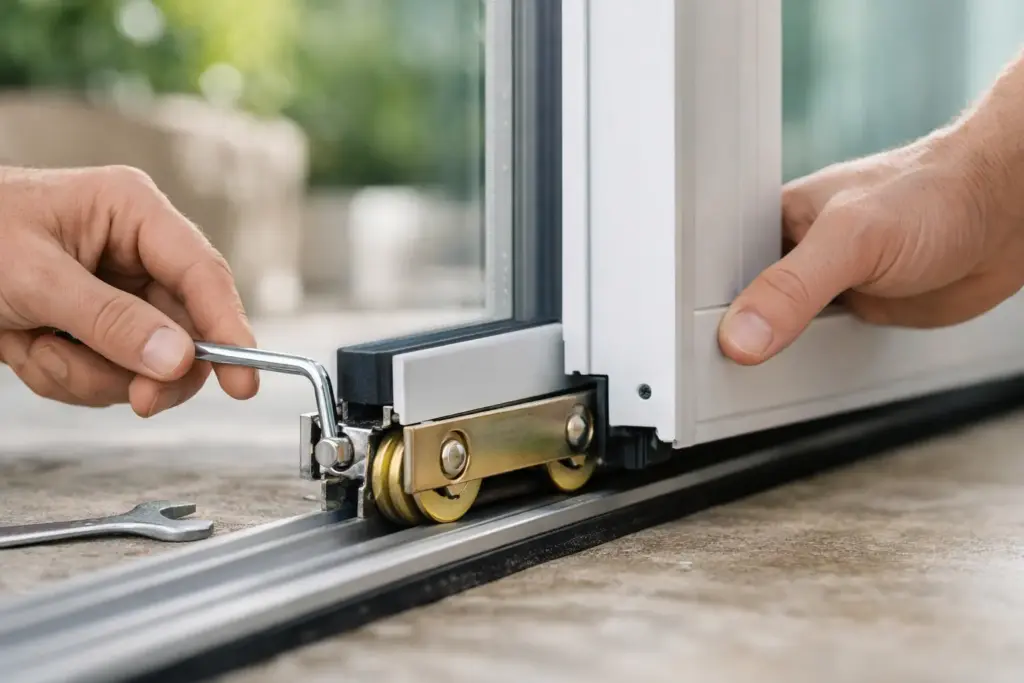
A patio door that scrapes along the track, needs a firm shove to move or will not meet the lock cleanly is usually telling you something useful. Knowing how to align patio door rollers can restore a smoother slide and reduce strain on the handle, lock and frame. But adjustment is only the right fix when the rollers and track are still in serviceable condition.
Most sliding patio doors use adjustable rollers at the bottom of the sash. Raising or lowering them changes the height of the door in the frame. A small adjustment can correct a door that has dropped slightly over time. It will not, however, repair cracked wheels, a bent track, a damaged frame or a failed locking mechanism.
Check the cause before adjusting the rollers
Start by opening the door fully and looking closely at the bottom track. Vacuum out grit, leaves, pet hair and any small stones. Yorkshire weather brings plenty of moisture and debris into exposed tracks, and even a modest build-up can make a good roller feel faulty.
Then look for obvious damage. A flattened, dented or lifted track can cause the door to catch in the same place every time. If the problem only happens at one point in the opening, track damage is more likely than poor alignment. If the door drags throughout its travel, feels low on one side or does not line up with the keep when closed, roller adjustment may help.
Check the locking action too. Close the door gently without lifting the handle. Does the latch meet the keep correctly? Does the handle need excessive force to lock? Do not keep forcing it. A patio door that has dropped can place unnecessary pressure on its locking parts, and a stiff lock is a security issue as well as an inconvenience.
What you need to align patio door rollers
For many UPVC sliding patio doors, you will need a medium flat-head or crosshead screwdriver. The adjustment screws are commonly found near the lower corners of the door sash, either on the inside face, the edge or behind small plastic caps.
The exact arrangement varies by manufacturer. Some systems use one adjuster on each bottom corner; others have a separate screw for fixing the roller assembly and another for height adjustment. Avoid undoing screws at random. If a screw is holding the roller unit in place rather than adjusting it, the door can become unstable or more difficult to refit.
It helps to have a vacuum, soft brush and silicone-based lubricant suitable for door tracks and moving hardware. Do not use thick grease or general-purpose oil on the track. These products attract dust and grit, creating the same dragging problem again a few weeks later.
How to align patio door rollers step by step
Open the patio door enough to access the lower corners comfortably. Locate the adjustment screw on one side and turn it a quarter-turn only. On many doors, turning clockwise raises that side of the sash and anticlockwise lowers it, but this is not universal. Watch the gap between the sash and frame as you adjust to confirm which direction moves the door.
Make the same small adjustment to the opposite roller if the whole door needs lifting. If one corner is catching or the door looks uneven, adjust that side first. The aim is to support the weight evenly, not to raise the door as high as possible.
After each adjustment, slide the door from fully open to fully closed. It should move with steady resistance rather than scrape, jump or bind. Close it against the frame and check the reveal around the edges. The gaps should look consistent, and the locking points should line up without needing to lift or push the door into position.
Test the handle only once the door is sitting naturally in the frame. A correctly aligned door should lock with normal hand pressure. If it locks only when you lift the sash, the rollers may need a little more adjustment. If the handle is still stiff despite good alignment, stop there. The fault may be within the lock, keeps or gearbox rather than the roller system.
Keep adjustments small
A quarter-turn can make a noticeable difference. Large adjustments make it harder to identify what has improved and can leave the door sitting too high, causing it to rub at the top or catch the frame.
If you lose track of the setting, return each adjuster gradually to its previous position rather than winding it fully in or out. Taking a quick photo before starting can be helpful, particularly where adjustment screws sit behind trim caps.
Clean the track while the door is open
Use a vacuum nozzle followed by a dry brush or cloth to remove packed debris from the running channel. Pay attention to the corners and drainage holes. Blocked drainage can hold water in the track, encouraging corrosion and carrying more dirt around the rollers.
Apply a light amount of suitable silicone lubricant to the moving parts if needed, then slide the door several times to distribute it. Wipe away any excess. The track should be clean and dry-looking, not coated in lubricant.
When adjustment will not solve the problem
Roller alignment is often confused with roller repair. If a wheel has worn flat, seized, split or come loose from its housing, adjustment may lift the door temporarily but will not make it run properly. The same applies where the aluminium track is badly damaged or the sash has become distorted.
Signs that replacement rollers or a professional repair are needed include a grinding noise, a door that drops again soon after adjustment, visible metal shavings in the track, a sash that rocks when lifted, or a door that remains heavy despite a clean track. Older patio doors can also suffer from tired roller bearings that fail under the sash weight.
Do not remove a heavy patio door on your own unless you are confident it can be safely supported and refitted. Glass units and reinforced UPVC frames make these doors heavier than they appear. Poor handling can damage the glass, frame, track or locking gear, turning a straightforward repair into a more expensive job.
Watch for frame and lock alignment problems
Not every dragging patio door is a roller issue. Movement in the building, worn seals, loose keeps and frame distortion can all affect how the door closes. If the door is smooth while open but becomes difficult only in the final inch before locking, inspect the keeps and lock engagement rather than continuing to adjust the wheels.
Similarly, a door that catches at the top may be sitting too high, but it may also have a bowed sash or damaged frame. Lowering the rollers to stop top contact can then make the bottom drag and leave the lock misaligned. This is where a specialist diagnosis saves time and avoids repeated adjustments that mask the real fault.
For landlords and businesses, a door that does not lock reliably should be dealt with promptly. Smooth operation matters, but security comes first. A temporary improvement in sliding action is not enough if the multipoint lock does not engage fully.
A practical point on older patio doors
On an older UPVC patio door, replacing worn rollers is usually far more cost-effective than replacing the complete door. The right repair depends on the make of the system, the sash weight and the condition of the track. Matching the roller size and height correctly matters, as near-identical parts can sit differently and affect the lock line.
Repair UPVC regularly diagnoses sliding doors across West Yorkshire where a simple adjustment, new rollers or track repair can extend the life of the existing door without the cost and disruption of replacement. A clear fault assessment is particularly worthwhile when the door is heavy, glazed, jammed or no longer secure.
A patio door should slide freely, close squarely and lock without a fight. If small, careful roller adjustments do not achieve all three, stop forcing the door and arrange a proper repair before worn parts cause further damage.