
8 Best Ways to Secure Patio Doors Properly
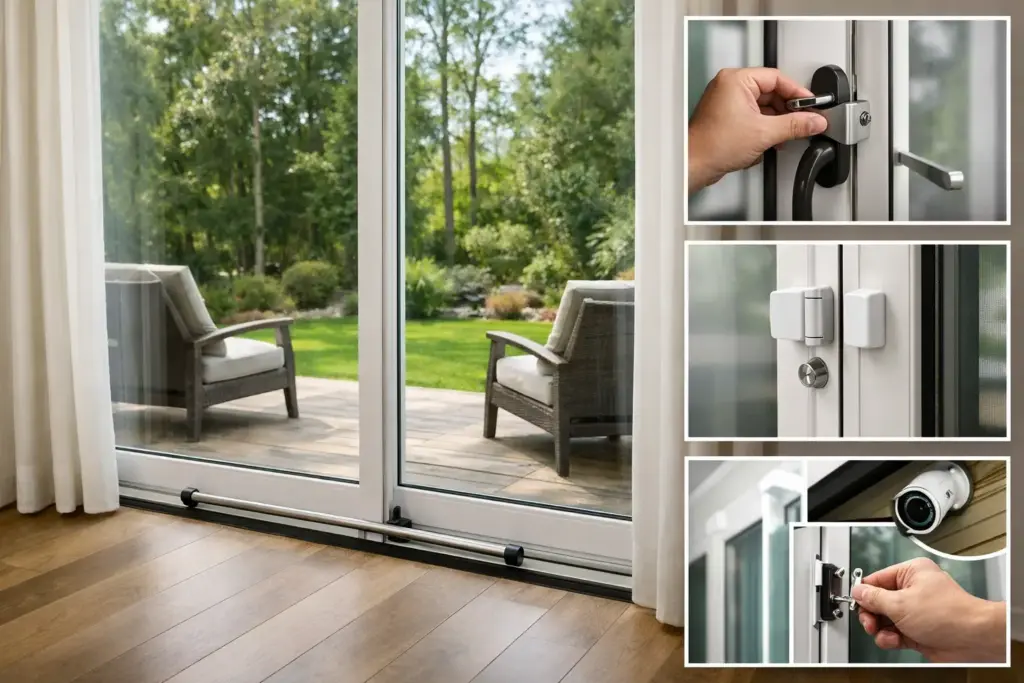
A patio door can look closed while the lock is only partly engaged, the sash has dropped on worn rollers, or the handle is no longer operating the mechanism properly. The best ways to secure patio doors start with making sure the door itself is sound – then adding the right security measures for its design.
For homes, rental properties and business premises across West Yorkshire, patio door security is not just about fitting another lock. A door that drags, sticks or needs a lift to lock needs attention. Forcing it into place can damage the lockcase, keep the hooks from engaging and leave the property less secure than it appears.
1. Check that the door locks fully every time
Start with the simplest test. Close the patio door normally, lift the handle if fitted, turn the key and then try to move the door from outside. The handle should feel firm, the key should turn without resistance and the locking points should engage cleanly.
If you have to pull, push or lift the door to make it lock, do not ignore it. Sliding doors often drop because rollers wear or become misaligned. On hinged French-style patio doors, worn hinges or a faulty multipoint mechanism can cause the same problem. The lock may still turn, but not all locking points will be reaching the frame correctly.
A specialist repair is usually far more cost-effective than replacing a complete door. Correcting the alignment and replacing failed parts restores smooth operation as well as security.
2. Fit anti-lift blocks to sliding patio doors
A sliding patio door should not be able to be lifted out of its track. Anti-lift blocks, sometimes called anti-lift devices, reduce the gap above the sliding sash so it cannot be raised enough to clear the bottom track.
This is one of the best ways to secure patio doors with older sliding systems, particularly where the existing lock is in good working order but the door has noticeable movement in the frame. The blocks need to be fitted with enough clearance for normal running. If they are set too low, the door will scrape, become difficult to slide and put unnecessary strain on the rollers.
Before fitting anything to the frame, check the door is correctly adjusted. A dragging patio door can make a security upgrade feel ineffective because the lock is still under pressure each time it is used.
3. Upgrade weak or worn patio door locks
The locking arrangement depends on the door type. Many sliding patio doors use a hook lock operated by a handle and cylinder. Modern French doors and some larger patio systems use multipoint locking, with hooks, rollers or bolts along the edge of the door.
A loose handle, a key that spins, a lock that only works from one side or a mechanism that will not engage are all warning signs. Do not keep using excessive force or leave the key in the lock as a workaround. A failing lock can stop working completely, often at the least convenient time.
Where suitable, upgrading the cylinder and handles can improve resistance to snapping, drilling and forced operation. However, the cylinder is only one part of the system. A high-security cylinder will not compensate for a damaged lockcase, misaligned keeps or a door that does not close squarely. The whole installation needs checking as one unit.
4. Keep tracks, rollers and hinges in working order
Patio door security and smooth operation are closely connected. Dirt in a sliding track, flat-spotted rollers or worn wheels can cause the sash to sit low. That changes the position of the hook lock in relation to its keep and can leave it only partly engaged.
Vacuum loose grit from the track and wipe it clean regularly. Avoid packing the track with heavy grease, which attracts dirt and can make the problem worse. If the door still catches, rocks or feels heavy after cleaning, it is likely to need adjustment or replacement rollers.
For hinged doors, look for gaps that vary around the frame, scrape marks near the threshold and a handle that becomes stiff as the door closes. These are common signs that the hinges or keeps need adjustment. Getting the geometry right protects the mechanism and makes the door secure without a daily struggle.
5. Add a visible secondary security device where appropriate
A secondary patio door lock can provide useful extra protection, especially on an accessible ground-floor door. Options include purpose-made sliding door bolts, lockable patio door bars and track-mounted security devices. The best choice depends on whether the door is used as a main entrance, an occasional garden access point or part of a rental property.
A bar can be a sensible deterrent when the property is empty, but it must be removed quickly by anyone inside if the patio door is part of an escape route. Do not fit a device that could prevent safe exit during a fire. For regularly used doors, a properly repaired primary lock combined with anti-lift protection is often a more practical everyday solution.
Visible security also has value. A well-fitted device signals that forced entry will take more time and create more noise, which can be enough to make an opportunist move on.
6. Check the glass and glazing beads
The glass is part of the security system. Double glazing should sit firmly within the sash, with glazing beads correctly clipped in place and no movement around the perimeter. If a sealed unit is cracked, loose or misted, it is worth having it assessed rather than waiting for it to fail further.
Toughened safety glass is commonly used in patio doors, but it is not the same as laminated security glass. Laminated glass holds together after impact and can offer additional delay against forced entry. It may be worth considering for a replacement sealed unit on a particularly exposed door, although it costs more and is not always necessary.
External glazing beads on older doors deserve particular attention. They should be secure and correctly fitted. If they are damaged or loose, have them repaired rather than attempting a makeshift fix that affects the weather seal or glass support.
7. Secure the frame, keeps and surrounding area
A strong lock needs a strong fixing point. On patio doors with hook locks or multipoint mechanisms, the keeps in the frame must be securely fixed and free from cracks, movement or damage. If the lock hooks are missing the keeps by a few millimetres, adjusting the keeps or the door can make a significant difference.
Also look beyond the door. Good external lighting, clear sightlines and a maintained garden gate can reduce opportunities for someone to work unseen. Avoid leaving ladders, heavy tools or furniture that could be used to gain access close to the property.
Curtains and blinds help protect privacy, but keep valuables out of sight rather than relying on window coverings alone. For landlords and commercial premises, routine checks between tenancies or after periods of vacancy can identify a failing patio lock before it becomes an urgent callout.
8. Act quickly when the lock starts to fail
Patio door faults rarely fix themselves. A stiff key, floppy handle, grinding sound or door that suddenly needs lifting are early signs that a component is wearing out. Leaving it until the door will not lock can mean an emergency repair, temporary boarding or an insecure property overnight.
Take a short video of the fault if it is intermittent. It can help a specialist understand whether the issue is likely to be the rollers, handles, cylinder, hinges or locking mechanism before attending. A clear diagnosis also avoids paying for replacement parts that are not needed.
Repair UPVC can assess faulty patio doors, multipoint locks, rollers, hinges and glazing components, with practical repair options and fixed-price quotes before work begins. Where possible, repairing the existing door saves the cost and disruption of full replacement while restoring secure, reliable operation.
If your patio door no longer closes smoothly or does not lock with one easy movement, treat it as a security issue now rather than a job for later. A properly aligned door with sound locks and correctly fitted security measures gives you the reassurance that closed really does mean secure.