
Top Causes of Window Handle Failure at Home
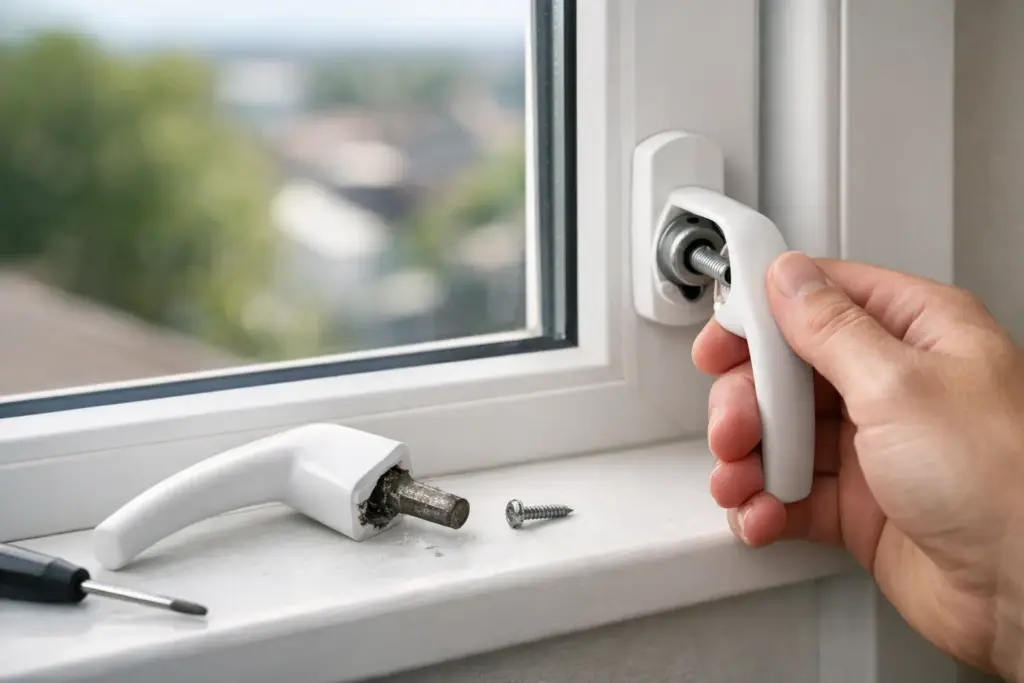
A window handle that suddenly spins, jams or will not lock can turn a simple daily task into a security concern. The top causes of window handle failure are usually not the handle alone. On most uPVC windows, the handle is connected to a spindle and locking mechanism inside the frame, so the visible problem can have several possible causes.
The good news is that a failed handle does not normally mean you need a new window. In many cases, a specialist can replace the worn part, realign the opening sash or repair the mechanism for far less cost and disruption than replacement.
1. A Worn or Broken Handle Spindle
Most modern uPVC window handles use a square metal spindle. When you turn the handle, this spindle operates the locking gearbox inside the window sash. Over years of use, the spindle can wear down, snap or become the wrong fit for the mechanism.
A common sign is a handle that turns freely but does not move the locking points. You may also find that the handle feels loose, drops down under its own weight or only works when held in a certain position. The handle itself may be cracked around the base, particularly if it has been forced while the window was stiff.
Replacing a handle can be straightforward, but the replacement needs the correct spindle length and screw centres. A poorly matched handle may appear to fit while failing to operate the lock properly. This is why it is worth identifying whether the spindle, handle base or internal mechanism has actually failed before ordering parts.
2. A Failed Window Locking Mechanism
If the handle is intact but will not turn, or turns only part way, the fault may be inside the window. uPVC casement windows commonly use an espagnolette locking mechanism, often called an espag. This is the long strip of metal inside the sash that moves locking cams or rollers into position when the handle is turned.
The internal gearbox can wear, seize or break, especially on older windows that have been exposed to years of condensation, draughts and repeated use. In some cases, the mechanism has failed because the sash has been difficult to close for a long time and extra pressure has been put on the handle.
This fault should not be ignored. A window that will not lock properly can leave a ground-floor room, office or rental property vulnerable. It can also allow draughts and rainwater through if the sash is not pulling tightly against its seals.
A repair engineer can usually test the mechanism, identify the correct replacement and fit a like-for-like part. The availability of parts depends on the age and make of the window, but many failed mechanisms can be repaired without replacing the frame or glazing.
3. Dropped Hinges and Poor Window Alignment
A handle often gets blamed when the real problem is that the window sash has dropped. Friction stays, the hinges that support outward-opening uPVC windows, can wear, bend or become stiff. As a result, the sash no longer lines up with the locking keeps on the frame.
You may notice that the window catches on one side, needs lifting to close or leaves an uneven gap around the edge. The handle then becomes hard to turn because the locking cams are trying to engage in the wrong position. Forcing it can damage the handle, spindle and gearbox at the same time.
This is particularly common on larger or frequently used windows, such as kitchen, bedroom and office windows. It can also happen after heat changes cause materials to expand and contract, or when the sash has been left open in strong winds.
The right repair may involve adjusting or replacing the hinges, then checking the keeps and lock engagement. Simply fitting a new handle without correcting the alignment can lead to the same failure again within weeks.
4. Dirt, Corrosion and Lack of Maintenance
Window mechanisms sit in narrow channels around the sash where dust, old lubricant, paint, insects and moisture can build up. Over time, the moving parts become stiff. If the window is near a busy road, a kitchen, bathroom or coastal area, grime and moisture can make the problem worse.
Corrosion is more likely on older hardware or where water has repeatedly entered through damaged seals. The first sign is often a handle that feels heavier than it used to. It may become difficult to lift into the locked position, then eventually seize altogether.
A light clean and suitable lubricant can help a healthy mechanism operate smoothly, but it will not revive a broken gearbox or heavily corroded locking strip. Avoid spraying excessive oil into the handle or mechanism. It can attract more dirt and may hide the real issue temporarily.
Regular checks are more useful than a rushed repair after a complete failure. If a handle starts to feel tight, arrange an inspection before it is forced or the window becomes stuck open.
5. Forcing a Stiff or Jammed Window
A window handle is designed to operate a mechanism, not overcome a warped sash, seized hinge or misaligned lock. Pulling hard on the handle, using grips or leaning on it can crack the handle base, shear the spindle or break internal components.
This often happens when a window has been shut for months, when cold weather has made seals grip tightly, or when someone tries to close a sash that is caught on the frame. Landlords and letting agents can see this after a property has been empty, while homeowners may notice it after a holiday or a long spell of poor weather.
If the handle is stiff, stop before it snaps. Check whether the sash is sitting squarely in the frame and whether anything is obstructing it. Do not force the handle while pushing or pulling the window in a different direction. That can turn a minor adjustment into a mechanism replacement.
6. Incorrect Parts or Previous Poor Repairs
Not every replacement handle is compatible with every uPVC window. The spindle may be too short, too long or the wrong profile. Screw holes can also be mismatched. A handle fitted with loose screws may move against the sash and gradually damage the mounting holes.
Previous repairs can cause trouble too. For example, fitting a new handle to a failing mechanism may make the window seem better for a short time, but the underlying gearbox is still worn. Likewise, packing out a dropped sash without addressing worn hinges can prevent the locking points from engaging correctly.
A proper repair begins with diagnosis. The engineer should establish whether the fault is in the handle, spindle, mechanism, hinges, keeps or sash alignment before recommending a fix. This avoids paying for parts that do not solve the problem.
How to Tell What Has Failed
The way the handle behaves offers useful clues, although it cannot replace an on-site inspection. Four common symptoms are worth noting:
- A handle that spins freely often points to a damaged spindle, loose handle or failed gearbox.
- A handle that will not move may indicate a seized mechanism, poor alignment or a jammed locking point.
- A handle that moves but the window will not open can mean the locking strip has not released fully.
- A window that only locks when lifted or pushed usually has hinge or alignment issues.
If the window is open and will not lock, keep the room secure and avoid leaving the property unattended if it is accessible from outside. Do not remove the handle unless you are confident the sash can still be closed and secured afterwards.
When to Call a uPVC Window Repair Specialist
Call for a repair when the window is stuck open, will not lock, feels increasingly stiff or has a handle that has snapped or come loose. These faults can affect security, heat loss and weather protection, particularly during a Yorkshire winter.
Repair uPVC can diagnose failed handles, window mechanisms, hinges and locking issues, then provide a clear fixed-price quote before work begins. Where possible, the aim is to repair the existing window using correctly matched parts, with tidy workmanship and guaranteed results.
A stiff handle is an early warning, not something to put up with. Dealing with it while the window still opens and locks can often keep the repair simpler, quicker and more affordable.